01
The method
How this course works
How the lessons are laid out, how to pick your year, and what this is not.
 Clinical Compass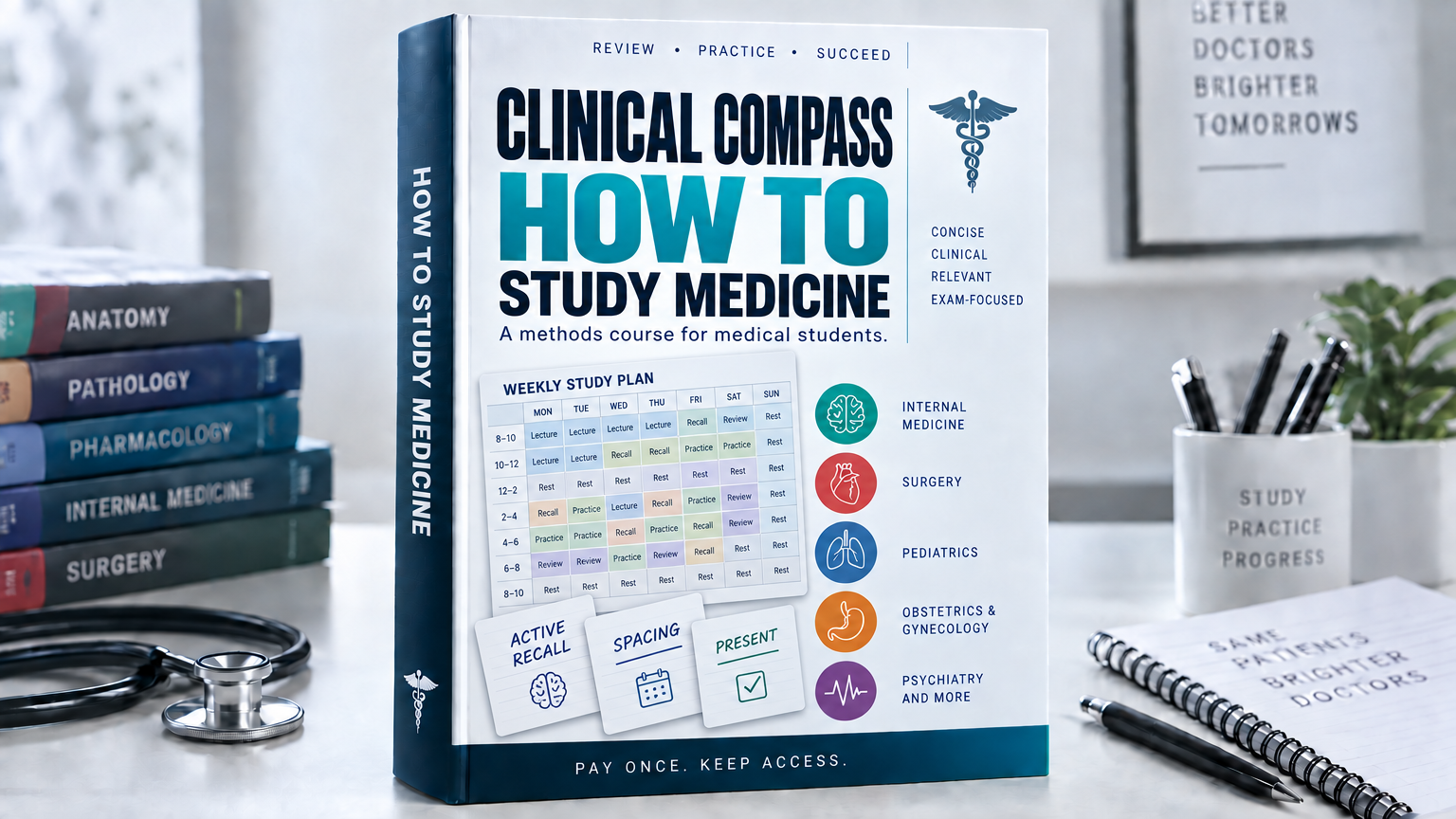
Clinical Compass
From first lecture to the ward. Pay once.
$12one-time
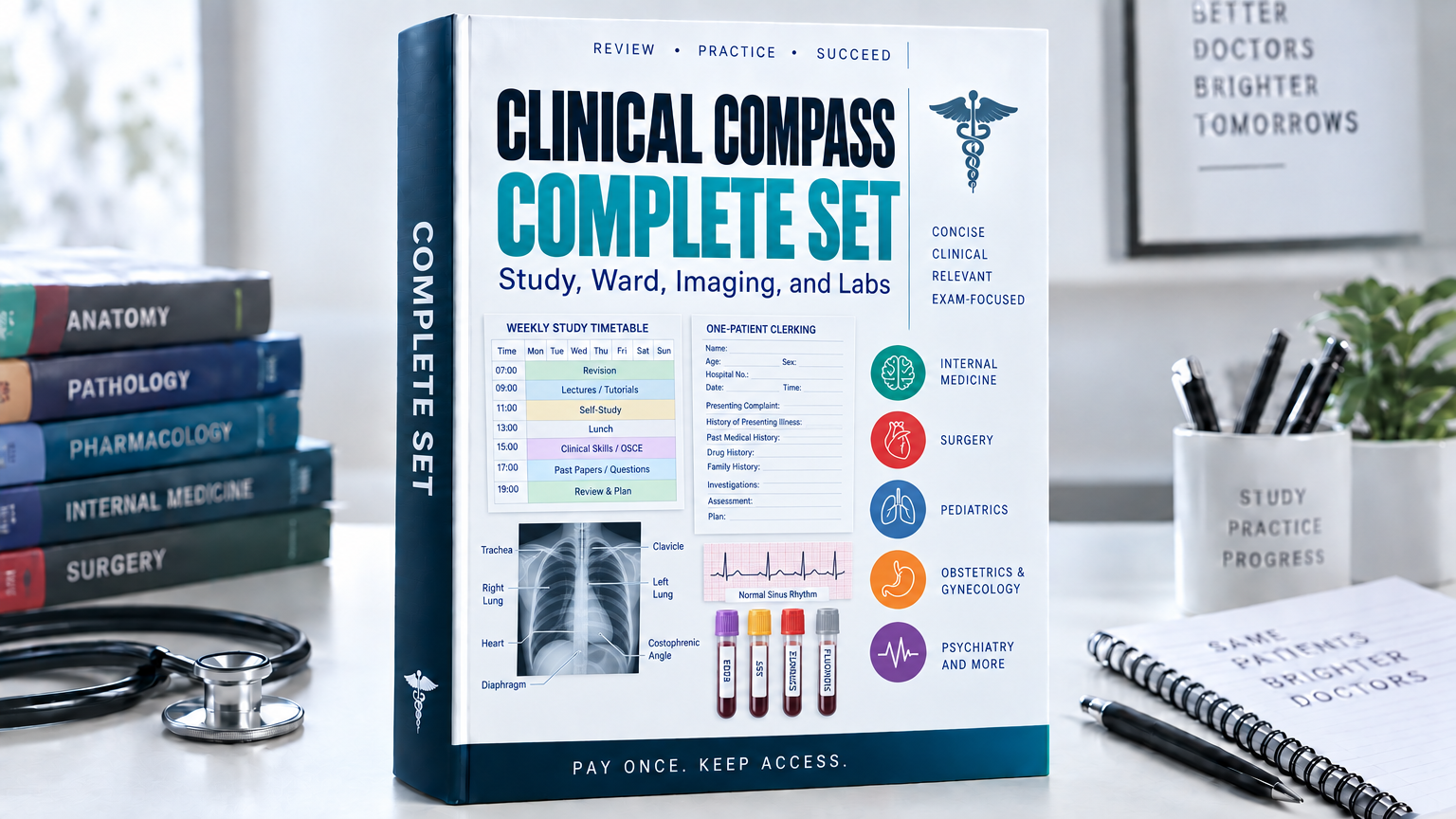
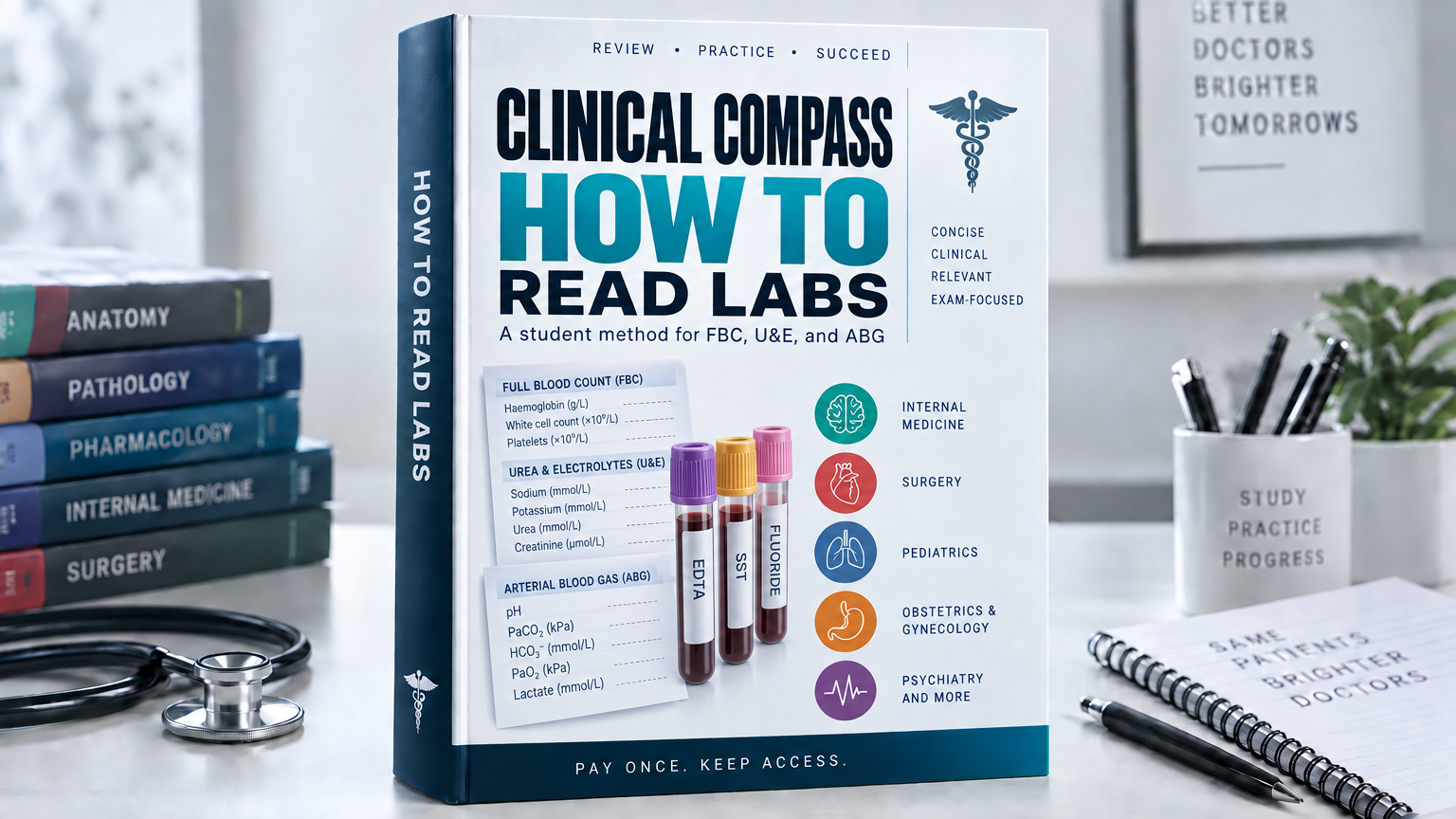
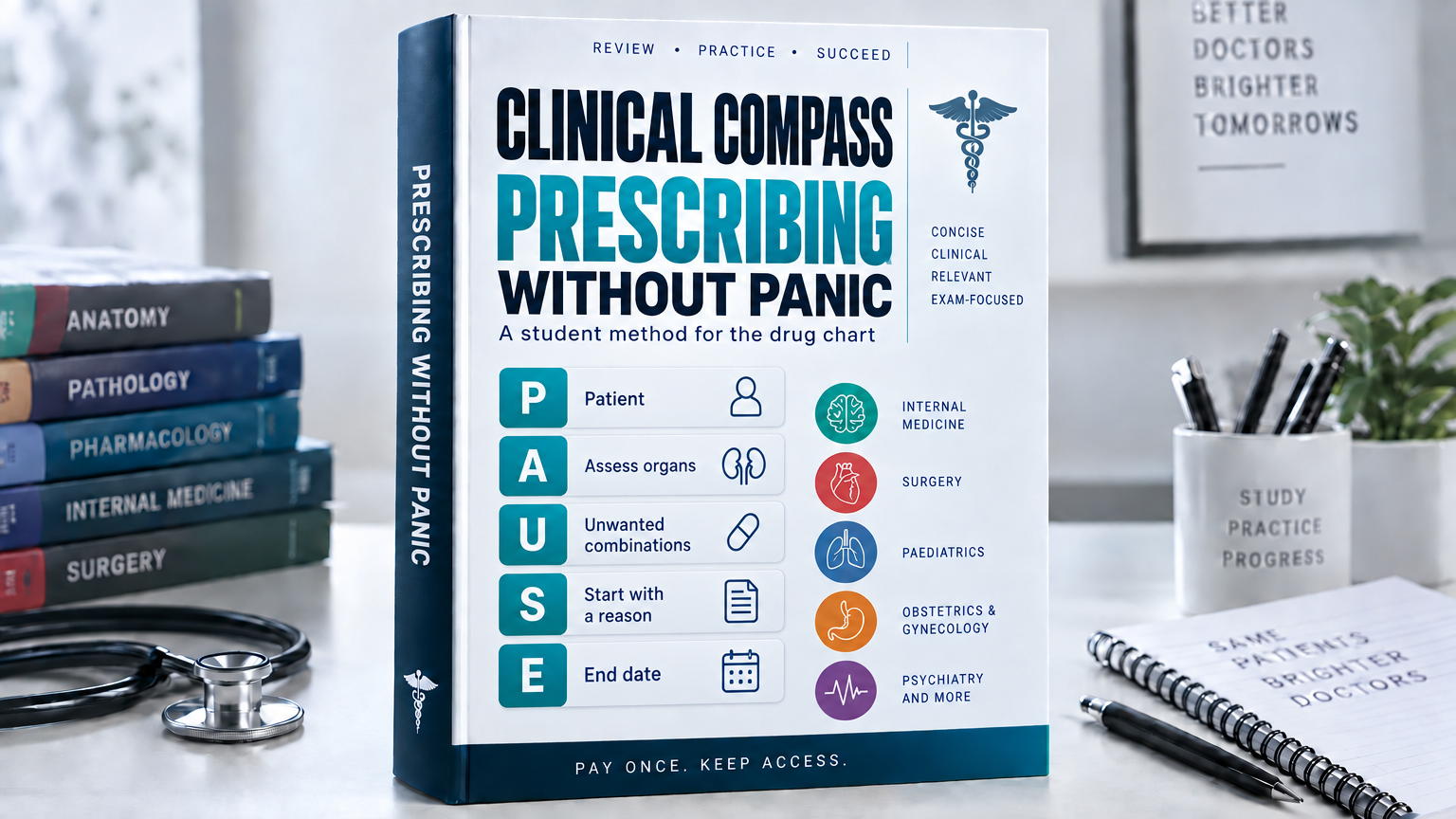
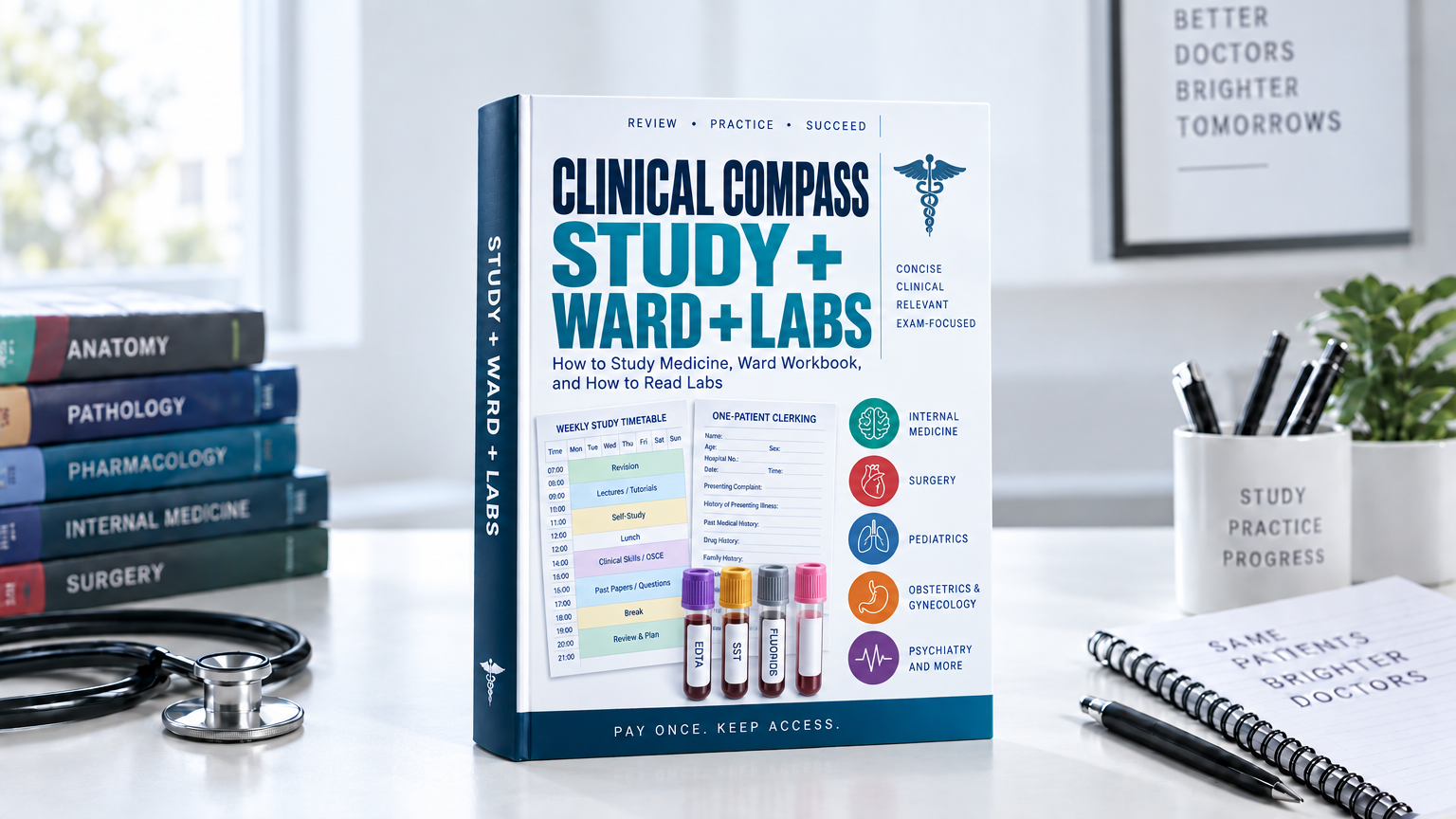
A methods course for medical students who are drowning in lectures and still cannot turn them into something they can use on a ward. You get a week you can actually run, memory tools that work, and how to think when the facts stop being enough. Not a fact dump. Not a question bank.
Inside this pack
Look at a sample page from this pack
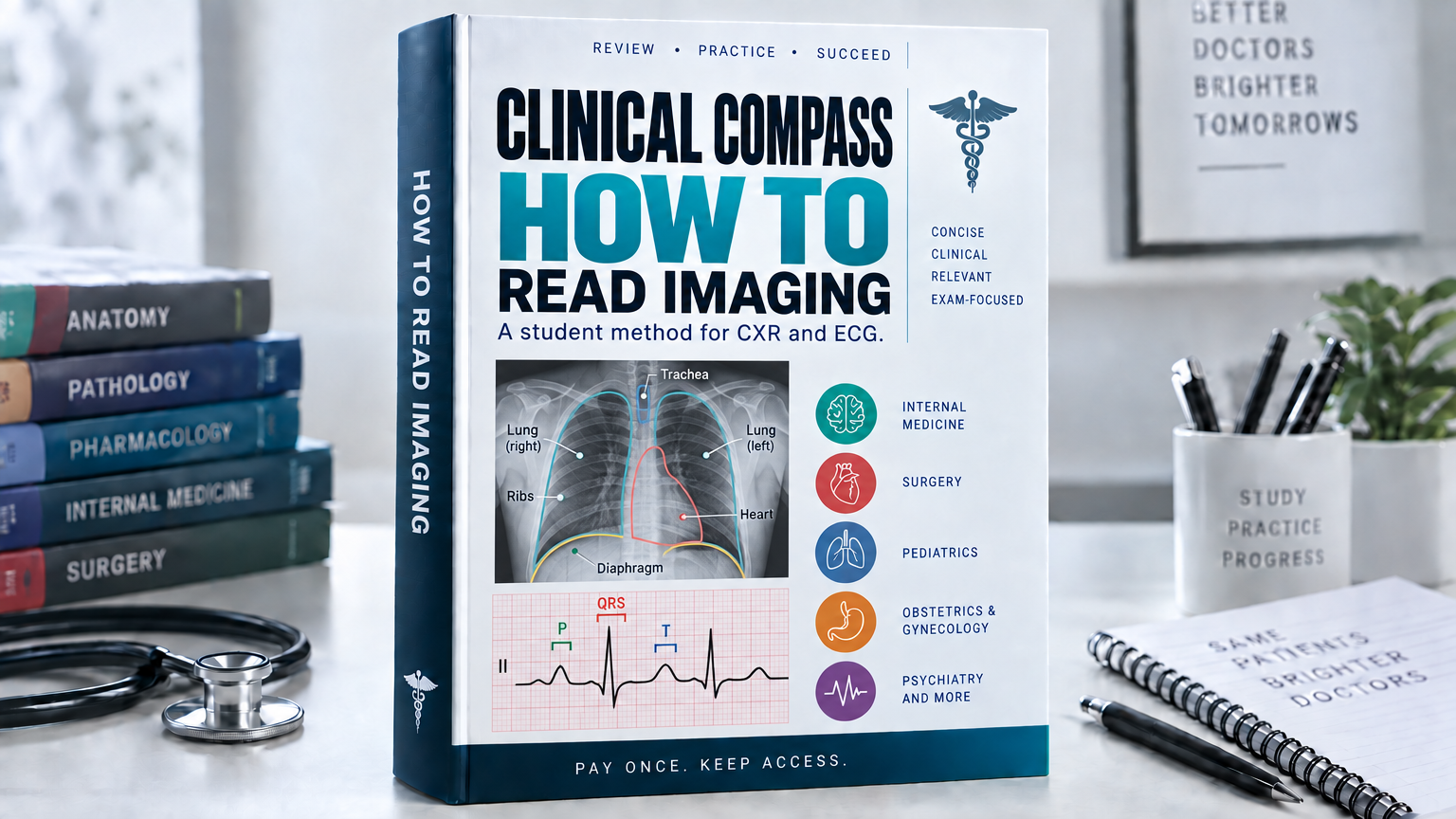
Confirm locally. Never invent findings.


Inside this pack
Nine parts. Methods for lectures, memory, the ward, and exams. Not a fact dump. Not a question bank.
The method
How the lessons are laid out, how to pick your year, and what this is not.
Hours, a template, sleep, and notes that last the year. Not a pile of extra work.
Lectures, labs, anatomy, physio, biochem, micro, immuno, and path as patterns. Not a second textbook.
Active recall, spacing, Anki as a protocol, and questions from week 1.
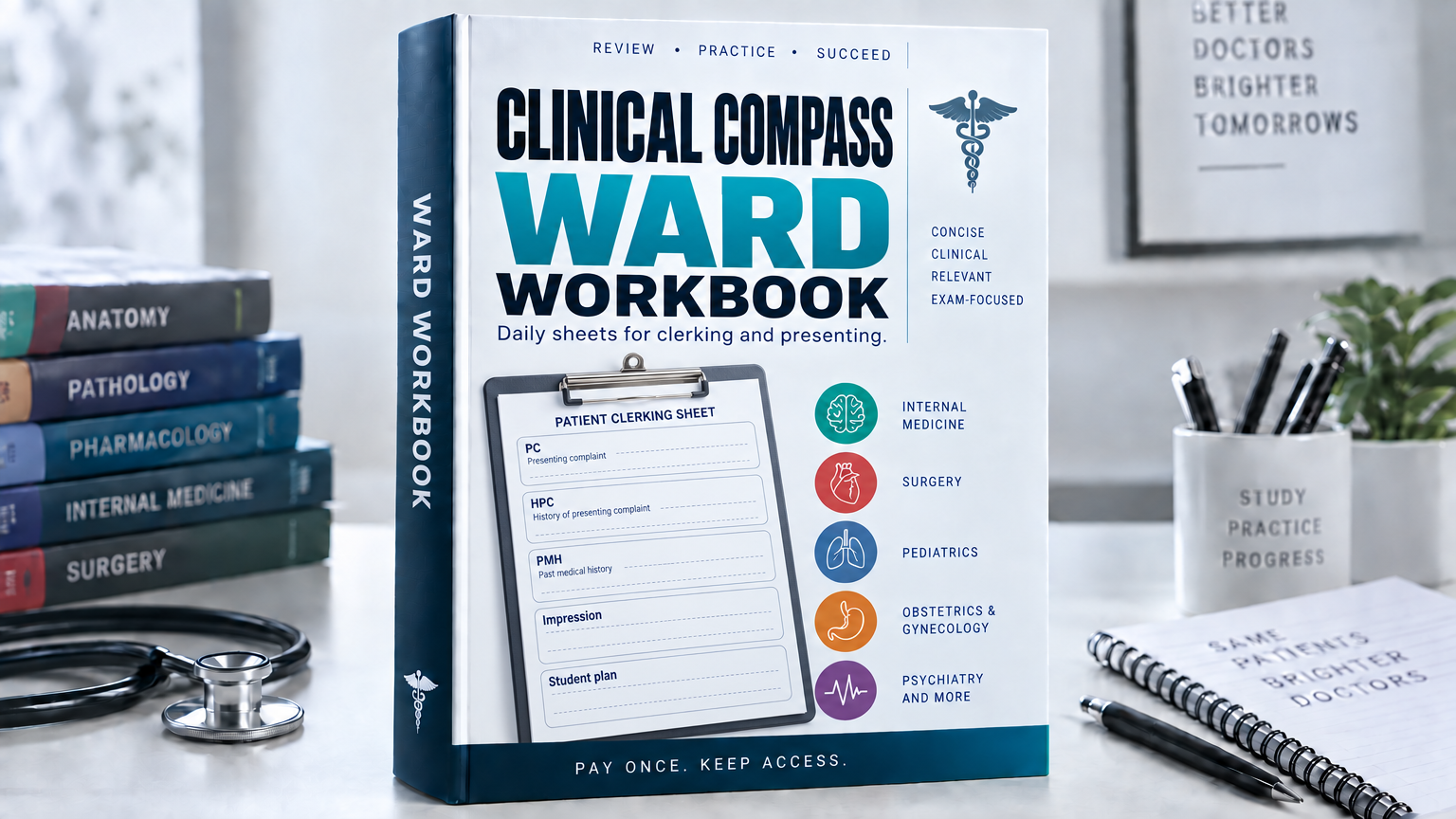
Stop collecting facts. Start scripts, presenting, and thinking on the ward.
The one-patient rule, before and after clinic, and how to study on placement.
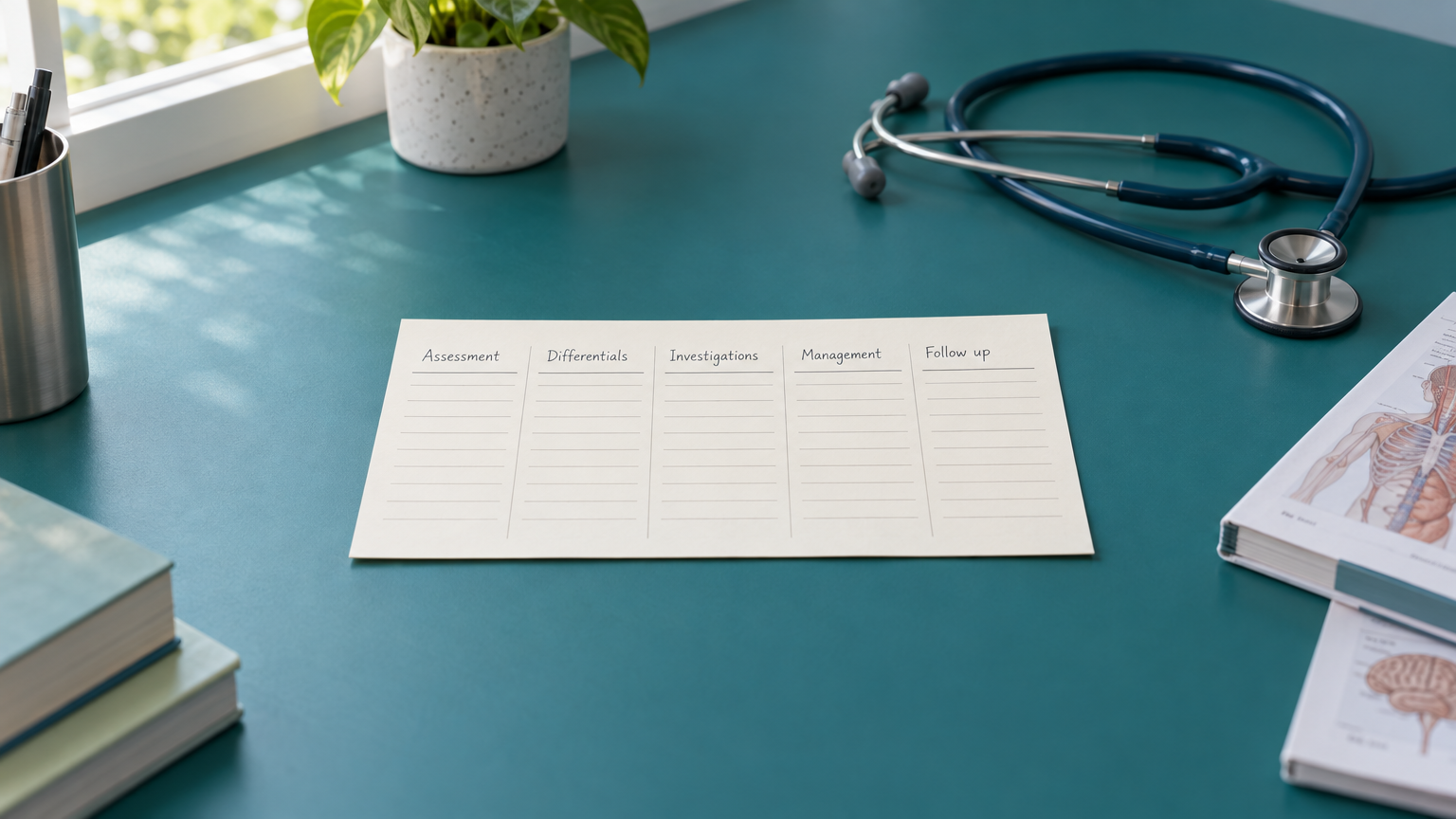
Illness scripts, undifferentiated patients, and working a case out loud.
Written papers, OSCEs, orals, and a 30-day sprint versus the long system.
Failing a block, burnout, studying in a second language, and keeping the course.